
What’s more awkward than letting a co-worker know their fly is undone? Telling a client “this call is being recorded” and hoping it doesn’t make things weird.
Just like pointing out a wardrobe malfunction, timing is everything. If you wait until the end of a call to say, “By the way, I recorded this,” it can feel like you’ve held back something someone really should’ve known upfront (much like letting a colleague walk around with their zipper down for an hour).
As uncomfortable as call recording disclosures can be, they’re a sign of a well-run firm. It signals to clients that you’re transparent, organized, and protective of their privacy. And when positioned correctly as a tool for accurate note taking, stronger team collaboration, and better client service, call recording can save your team a huge amount of time and stress.
In this guide, we’ll break down what call recording disclosure actually is, why it matters, and how to approach it in a way that keeps clients at ease while protecting your firm. We’ll also provide practical scripts and implementation ideas for inbound and outbound calls, ensuring your process remains consistent no matter who picks up the phone.
What is phone call recording disclosure?
A phone call recording disclosure (sometimes called a call recording notification, recorded line message, or call monitoring disclosure) is a simple heads-up that you're recording the conversation.
The disclosure could be an automated message that plays before the call connects, or you could follow a call recording disclaimer script where you say something at the start of a call like:
“Before we get started, I just want to let you know I’ll be recording this call for note taking purposes. Is that okay?”
Why is call recording disclosure important?
Call recording disclosure is important because it lets clients know they’re on a recorded line, gives them a chance to ask questions, and offers them the option to opt out if they’re not comfortable.
It’s a good moment to explain why you record calls in the first place, whether that’s for accurate note taking (like the example above), continuity across your team, or keeping a clean record of what was discussed.
While disclosure can feel like a small detail, it can make a big impact. In some jurisdictions, recording without disclosure can put your firm at legal risk. Unauthorized recordings can’t be relied on later if they need to be referred to in a formal process (like legal proceedings). Even if it never gets to that point, a surprise recording can quickly damage trust.
What’s the difference between call recording disclosure and consent?
It’s also important to understand the difference between call recording disclosure and consent.
Disclosure means informing the other person that the call is being recorded. Consent means the person agrees to the recording taking place.
In some jurisdictions, disclosure alone may be sufficient if the other party continues the conversation after being informed. In those cases, the law may treat this as implied consent. In other jurisdictions, you may need clear verbal consent before continuing the call.
This distinction matters most in all-party consent states (more on these below). Relying on implied consent, which assumes someone consented to recording by staying on the line after disclosure, is shakier ground in those states. A generic "this call is being recorded" message tells people what's happening, but it doesn't prove that everyone agreed to being recorded.
One-party consent vs two-party (or all-party) consent
Call recording laws generally fall into two categories:
- One-party consent: Only one person on the call needs to consent to the recording. If you’re a participant in the conversation, that can be you.
- Two-party (or all-party) consent: Everyone on the call needs to be informed and give consent. This becomes especially important if you’re adding someone else into the conversation or moving the call into a conference line.
A simple way to think about it is this: one-party consent is like taking your own file note. You don’t need everyone’s permission to write down what was said. Two-party (or all-party) consent, on the other hand, is more like signing an agreement. It only works if everyone involved agrees.
Which states require all-party consent?
Most US states follow one-party consent, but roughly a dozen require all parties to consent before a conversation can be recorded.
Exactly which states make the list varies slightly between sources, because a few states have nuanced or court-shaped rules, but the states commonly treated as all-party consent for phone calls are: California, Connecticut, Delaware, Florida, Illinois, Maryland, Massachusetts, Michigan, Montana, New Hampshire, Oregon, Pennsylvania, and Washington.
How to know what is required for compliance in your jurisdiction?
Call recording rules can vary significantly between countries, states, and provinces. It's best to confirm the specific requirements that apply to your firm before implementing call recording.
If you’re unsure what applies in your jurisdiction, a few practical options include:
- Review guidance from your local bar association or legal regulator.
- Check the relevant privacy or telecommunications legislation in your jurisdiction.
- Ask your firm’s compliance lead or risk management team.
Even if your jurisdiction technically allows one-party consent, many law firms still choose to disclose recording clearly at the start of every call. This keeps the process simple, avoids confusion across jurisdictions, and reinforces transparency with clients.
Best practices for call recording disclosure
The best disclosures are simple, consistent, and easy for clients to understand. Here are a few best practices to follow:
- Keep disclosure short and clear: Use plain language to explain that the call is being recorded and why (no legal monologue needed).
- Choose the right timing: You can make the disclosure pre-call, at the start of the call, or after the call begins. The safest option is to deliver the call recording notification before the main conversation starts so the caller can provide explicit consent, opt out, or continue the call with implied consent where applicable.
- Train your team: If disclosures are handled verbally, make sure everyone knows what to say and how to respond if someone objects.
- Document the process: A simple written policy keeps disclosures consistent across your firm, especially when multiple people answer calls.
- Use the right tools: The easiest way to stay consistent is to build disclosure into your phone system, instead of relying on staff to remember it every time. That way, disclosure happens automatically, no matter who answers the phone or how busy the day gets.
With a phone system like VXT that’s purpose-built for law firms, you can play a welcome message for incoming calls (including your recording disclosure) before the call reaches your team, and enable automated recording announcements so callers are notified whenever a call is being recorded (more on this below). This takes the pressure off your staff, reduces human error, and ensures every caller gets the same clear disclosure every time.
How to implement call recording disclosure at your firm
The firms that implement call recording disclosure the best don’t rely on a single message or policy. Instead, they use a few layers of disclosure so clients hear it on the call, and can also find it in writing if they need to.
Here are the most common (and most effective) ways VXT customers manage disclosure:
1. Add a welcome message for incoming calls
A welcome message is a simple way to disclose recording before the call even reaches your firm, so callers know what to expect from the start.
Example script:
“Welcome to [Firm Name]. This call is being recorded for note-taking purposes. Please hold while we connect you to our team.”
How to set this up in VXT:
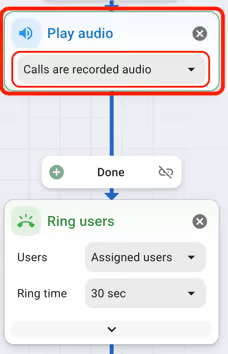
You can easily include a message like this in your call flow in VXT. Just add a Play audio step before your Ring users or Queue steps with your own custom message (image below).
2. Automated recording announcements
If you want disclosure to happen automatically (and consistently), recording announcements are one of the easiest ways to do it. VXT can automatically deliver a call recording notification whenever a call is being recorded, which helps remove the pressure on staff to remember.
You can also record your own call recording announcements in VXT to suit your firm’s tone and jutrisdiction requirements. You could keep it simple with something like “This call is being recorded,” or provide a more detailed explanation about note taking and privacy.
How to set this up in VXT:
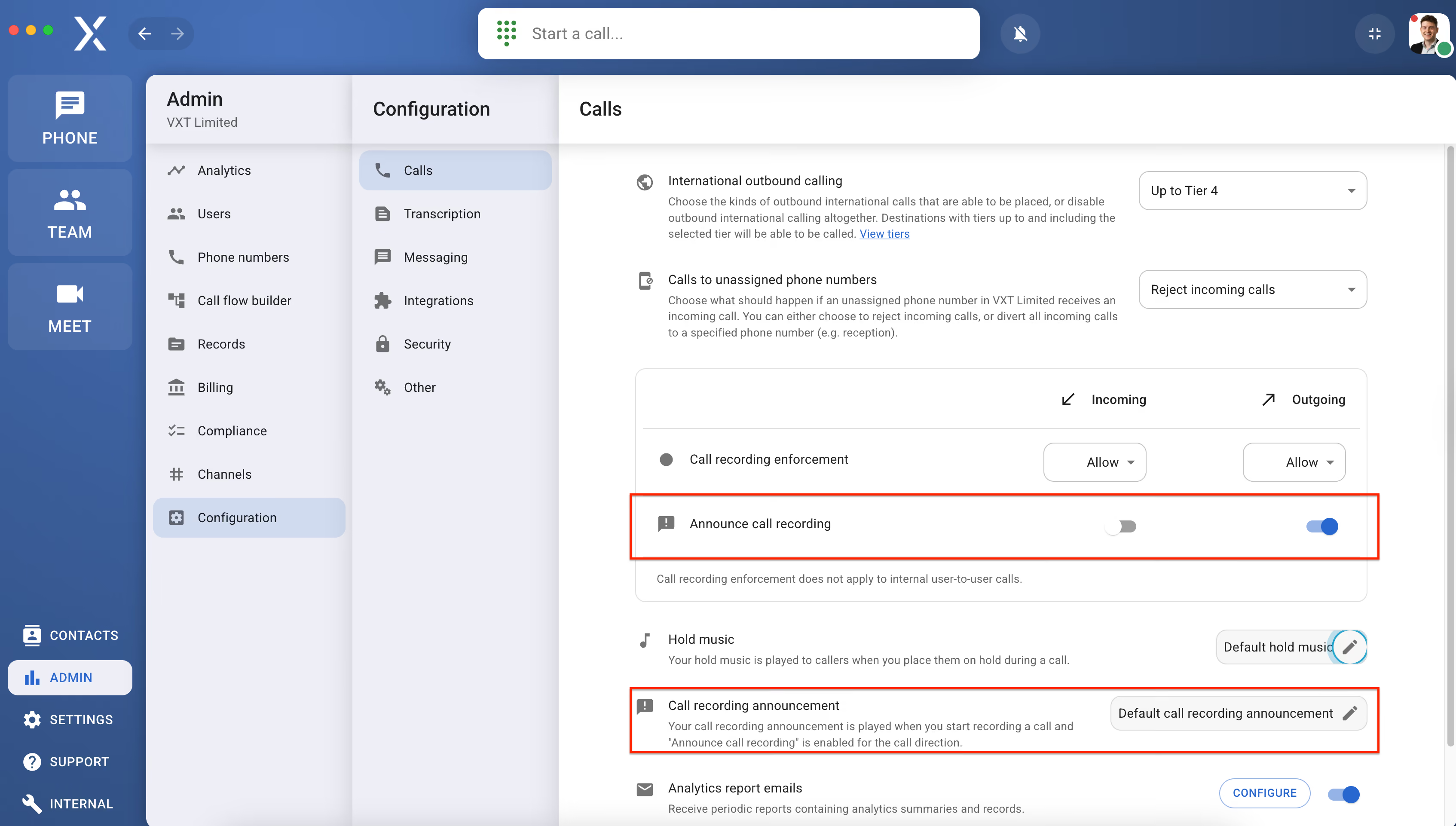
Go to Admin → Configuration → Calls → Announce Call Recording, then toggle it on or off for incoming and outgoing calls.
To customize the announcement, follow the same steps to reach Call Recording Announcement and select the pencil icon to edit the announcement and/or record your own.
3. Add a line to your email signature
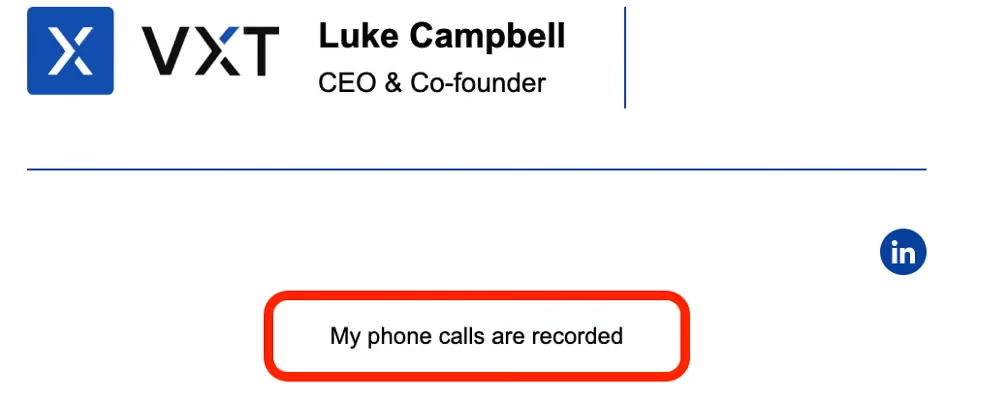
Email signatures are a great ‘quiet’ way to reinforce disclosure, especially for clients who book calls ahead of time or communicate mostly over email.
Here’s an example from VXT CEO and Co-founder, Luke Campbell’s email signature:
4. Include it in your privacy policy
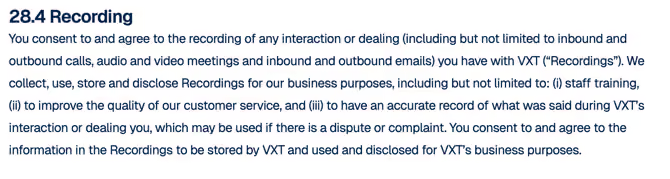
Your privacy policy (or similar document) is a great place to explain how call recordings and related client data are collected, used, stored, and protected. This helps set expectations, supports confidentiality, and provides transparency if a client ever asks about how recordings are handled.
Here's an example from VXT's Terms of Service:
5. Include it in client agreements (where appropriate)
For some firms, the clearest option is to include call recording consent as part of a wider client agreement, engagement letter, or onboarding documentation.
Example wording:
"The Client acknowledges and agrees that telephone communications with the Firm may be recorded for the purposes of maintaining accurate records. Such recordings will be securely stored and managed in accordance with the Firm’s privacy policy and applicable laws. Continued engagement with the Firm constitutes express consent to this practice."
6. Capture consent as well as disclosing recording (for all-party consent states)
If you or your clients are in an all-party state like Illinois, California, Florida, or Pennsylvania, the layers above are a strong start — but disclosure alone usually isn't enough. You instead need to obtain their consent before recording starts.
The good news is that this can be addressed with the right sequencing and a genuine opt-out, both of which you can build straight into your VXT call flow.
Here's a workflow that holds up well in all-party consent states. Treat it as a set of practices to consider, not as a guarantee of compliance:
- Disclose the recording up front. Do this before any substantive conversation, not partway through. How you do this differs by direction: on inbound calls you can play an automated notice before connecting; on outbound calls there's no pre-call audio, so the person placing the call states it at the very start.
- Obtain affirmative consent from every participant. Continuing to talk after a recording disclosure is weaker evidence of agreement in these states; an active "yes" from call participants is much stronger.
- Give people a real way to decline. If anyone refuses, the call should be able to continue without being recorded. VXT already lets you disable recording, so this is straightforward to support.
- Keep a record of the consent event. Start recording, play (or state) the notice that the call is being recorded, and let the caller verbally agree — so the recording captures proof they were informed and freely agreed. Where consent is instead a keypress (an inbound "press 1" menu), log the timestamp, number, and call. Either way, a record of consent is far more useful later than "we always play a message.
- Treat internal, user-to-user calls separately. Only assume they're lower-risk if they aren't "private conversations" under the relevant law and your firm's policy confirms there's no concern.
Example inbound call flow: Insert a Play audio step before your Ring users or Queue step that gives a notice and a real choice:
"Welcome to [Firm Name]. This call may be recorded for note-taking purposes. To consent and continue, press 1. To continue on a non-recorded line, press 2."
Only begin recording once the caller has actively consented, then log the consent event — timestamp, number, and call.
Example outbound script: Outbound calls can't rely on a call menu the way inbound calls can, so capture consent verbally at the very start, before the conversation begins. The cleanest way to make that auditable is to start recording first, then open with the disclosure, so the caller's agreement is captured on the recording itself:
"Hi, this is [Name] from [Firm Name]. Before we get started, I'd like to let you know I'll be recording this call for note-taking purposes — is that okay with you?"
Wait for a clear "yes" before you continue. If the client would rather not be recorded, disable recording and carry on the conversation without it.
Set up call recording disclosure at your firm with VXT
Call recording can be a huge advantage for law firms, but only if it’s done properly. That means understanding the call recording laws in your jurisdiction and having a clear disclosure process in place.
The easiest way to do that is to build disclosure into your phone system. With VXT, you can automate call recording disclosures, customize how recording works across your firm, and keep this consistent across inbound and outbound calls. You can also transcribe and summarize calls, and save key details straight into your practice management system against the right matter.
The best call recording process is the one your team doesn’t have to remember. If you want call recording to actually help your firm (instead of creating more admin), book a demo with VXT and we’ll help you set it up in a way that’s simple, consistent, and client-friendly.
.jpg)
.jpg)
.png)